
CLIENT
PodMe-podcast platform · B2C
FOCUS
Acquisition, onboarding, conversion; mobile + web
ROLE
Senior UX/UI Designer
TEAM
Senior Product Designer, Tech Lead, Developers, Head of Marketing, Content Producer
DURATION
October 20 – March 21
DURATION
The need
PodMe is a subscription platform offering exclusive podcast content. Despite popular shows like Mordpodden and Slutna Sällskapet, the brand lacked awareness, most users discovered episodes through Google, not by seeking out PodMe as a platform.
The brief was to improve onboarding and subscriber conversion. But research revealed deeper issues: the journey was fragmented, with friction at every step. New users landed on a marketing page focused entirely on app downloads, with no option to listen directly via web a major drop-off, especially for time-sensitive users who just wanted to try a podcast. SEO hadn't been prioritised, and metadata issues made PodMe hard to find organically.
Even those who downloaded the app often churned before completing sign-up blocked by long forms, required card input or forced social logins. These hurdles undermined the value of the 30-day free trial and created confusion about what users were actually signing up for.
The need wasn't just to improve onboarding, it was to rethink the entire entry experience: from SEO and first landing, to registration, listening and retention.
My role
As the Senior UX Designer, I was responsible for diagnosing friction in the onboarding flow and proposing solutions aligned with both user behaviour and business goals. I began with funnel analysis and qualitative research to understand how users discovered PodMe, what motivated them and where they dropped off running user interviews and usability testing focused on real-world behaviour.
During testing, I measured how long it took users to understand the offer, complete onboarding, or decide to abandon then compared those baselines against performance after design changes, revealing a clear improvement in time-to-value and engagement.
The insights reframed the whole scope: onboarding wasn't just an in-app issue it started at discovery. I restructured the journey from search and landing through to registration and first listen, removing friction and making the entry experience optional rather than forced.
The key insight
One unexpected but powerful insight emerged during research: while users cared about shows and genres, they often made real-time listening decisions based on how much time they had.
"If I've got 15 minutes, I want a 15-minute episode, not a 60-minute one I'll have to pause halfway through."
This led to two strategic shifts that went beyond UI:
-
I brought in the content team to explore short-format podcast content-episodes made for 15-minute sessions, which didn't yet exist in the catalogue.
-
I advocated for a playback-memory feature so users could resume across devices without hunting for where they left off.
These reframed the product around daily routines, time management and listener intent opening new angles for retention and content strategy.
Process & methods
Discovery focused on understanding where and why users dropped off not only in the app, but across the whole acquisition journey. I worked across product, marketing and tech to reframe onboarding as a full-funnel challenge, from SEO and first landing to trial start and activation.
Methods
-
Funnel analysis (app analytics, Google Play Console, Google Analytics)SEO audit (Screaming Frog) to surface visibility gaps
-
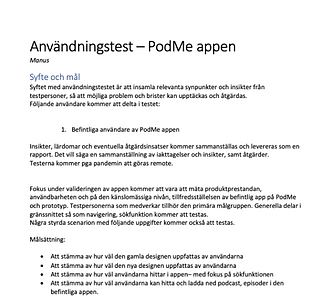
In-depth interviews + task-based testing on discovery and conversion
-
Persona development based on podcast consumption behaviour and intent
-
Card sorting to restructure landing page and onboarding flows
-
Wireframing and high-fidelity prototyping for mobile and web
-
Usability testing, including guerrilla methods, to validate direction
-
Behavioural mapping of "first-listen journeys" across web and app
RESEARCH
RESEARCH
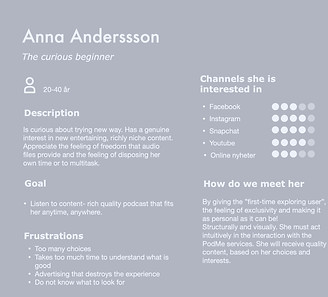
Depth interviews and behaviour-based personas "the curious explorer", a web-browser listener.
BEFORE

Before: an app-download-only landing page with no option to listen on web.
Ideation & implementation
With tight timelines and high urgency around conversion, we worked in fast, iterative cycles rather than long prototyping. I translated insights directly into design updates reworking flows, restructuring the landing page and simplifying registration in close collaboration with development.
Key decisions
-
Introduced guest access-start with just an email
-
Delayed card input until after the trial period to build trust
-
Removed social login to reduce friction
-
Gave users the option to listen via web immediately after signup
-
Highlighted short-form content for time-sensitive listeners
-
Added playback memory so users could easily resume listening
-
Clarified CTAs and value messaging throughout onboarding
Guerrilla usability testing confirmed users felt more confident engaging with PodMe after these adjustments, particularly once card input was no longer required upfront.
AFTER

AFTER

Redesigned discovery and inspiration view and a simplified listening and resume experience across devices.
Impact & results
For users
-
Transparent onboarding .Clear what PodMe offers, how to start and where to listen
-
Faster access by removing app download as a required first step
-
Simplified registration: no social login, no card entry before trial
-
Clearer messaging and structure, increasing trust and time-to-value
-
Choice to listen via web or app, depending on preference
For business
-
Increased subscriber conversion following onboarding changes
-
Higher completion rates of free-trial sign-up
-
Improved SEO strategy and metadata structure, stronger organic traffic
-
Stronger brand perception at first contact, building trust
-
Product positioning better aligned with real discovery patterns
Reflection & learnings
This project highlighted the power of aligning real user behaviour with business objectives, not just by removing friction, but by rethinking what value looks like in the moments that matter.
-
Shifting from "how to get users into the app" to "how to let them start listening as fast and confidently as possible" reshaped both the flow and the entry strategy
-
In subscription products, trust is everything delaying card entry and clarifying messaging were business levers, not just UX wins
-
Identifying a new behaviour (time-based intent) let me influence content strategy and roadmap, not just design
-
Fast, iterative work grounded in insight can create measurable impact, even under tight constraints