
Nestlé Health Science
UX Research & Information Architecture for Healthcare Professionals
I worked with Nestlé Health Science to support their digital transformation into a trusted knowledge platform for healthcare professionals working with tube feeding and clinical nutrition.
The project focused on understanding real-world clinical workflows, identifying critical information gaps, and structuring complex medical content so it could be accessed quickly and confidently under time pressure.
Context
Nestlé Health Science provides medical nutrition solutions used by healthcare professionals in hospitals, home care, and emergency settings.
The existing website contained valuable content, but it was difficult to navigate in real clinical situations. Healthcare professionals often had limited time, varying levels of experience, and high responsibility yet the information architecture did not reflect their real needs or workflows.
The Challenge
The main challenge was not lack of content, but lack of structure and prioritisation.
Healthcare professionals needed:
- Fast access to the right information in critical situations
- Guidance based on clinical context, not product structure
- Confidence when answering patient questions
- Support across different levels of experience
At the same time, the solution had to respect medical accuracy, legal constraints, and Nestlé’s global brand guidelines.
My Role & Responsibilities
UX Researcher & Interaction Designer
I was responsible for:
- Defining project goals and success criteria
- Conducting qualitative research and field studies
- Identifying and validating key audiences
- Building personas based on real clinical behavior
- Structuring content through information architecture
- Facilitating card sorting and usability testing
- Creating wireframes and validating solutions with stakeholders
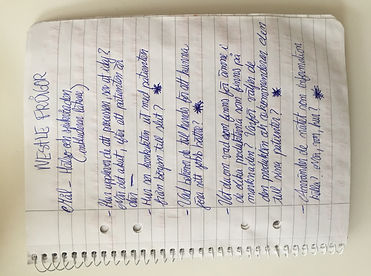
Research & Field Studies
To understand real clinical workflows, we conducted observational studies and interviews in hospital environments.
The goal was to understand:
- When information is needed
- What questions arise in practice
- Where uncertainty and stress occur
- How healthcare professionals currently search for answers
This phase revealed large gaps between how content was structured and how it was actually used in daily work.


Personas - Nurses
Based on research, we created personas representing different experience levels and contexts.
These personas helped us design for:
- Time pressure
- Uncertainty in unfamiliar situations
- Confidence building through clear guidance
- Fast access to validated medical information
The personas were used throughout design, prioritisation, and stakeholder discussions.

From Needs to Solutions
Audience needs were mapped directly to design and content strategies.
Examples included:
- Structuring content based on clinical situations
- Improving findability through organic search and metadata
- Enabling printable materials for use in care settings
- Prioritising clarity over volume
This ensured that every design decision was grounded in user needs.
Defining Key Audiences
Through research, we identified multiple target groups, but one group consistently acted as the key information hub, nurses.
Nurses:
- Interact with patients daily
- Handle practical decision-making
- Support both patients and relatives
- Bridge medical knowledge and everyday care
This made them the primary audience for the first phase of the solution.


Wireframes & Solution
Wireframes were created to test structure, prioritisation, and content flow.
The focus was on:
- Guiding users to the right content quickly
- Reducing cognitive load
- Supporting clinical decision-making
- Maintaining consistency with Nestlé’s design system
Testing showed improved clarity and faster access to relevant information.
Outcome & Learnings
The project resulted in a clearer, more structured knowledge platform that better supported healthcare professionals in their daily work.
Key learnings:
- In complex medical contexts, structure creates trust
- Designing for real workflows is more effective than designing for roles
- Research alignment is essential in regulated environments
- Simplicity is a competitive advantage in high-risk domains
This project strengthened my ability to work strategically with research, complexity, and stakeholder alignment in life science and healthcare.
Information Architecture & Validation
To validate how users expected content to be organised, we conducted card sorting sessions.
Participants grouped tasks and information into phases such as:
- Starting tube feeding
- Managing complications
- Patient follow-up
- Long-term care
This directly informed the site structure and navigation model.